Back to the site

Results

The same discipline, applied to your business

Before building AI systems for companies, I measured and optimized scientific simulations until they ran 678.9 times faster. It is the same way I work on any process that becomes slow or expensive.

678.9x

Molecular transport on GPU

  • I started from a simulation of molecules moving through a narrow channel that already existed as a serial and an MPI version (by a colleague). With 4 and 8 cores, MPI sped it up 3.6x and 6.4x, respectively.
  • I ported it to GPU with CUDA: 678.9 times faster than the serial version.
  • That speed made it possible to sweep more than 14,000 configurations and fix a bias in lateral movement that could not be seen before.
  • It is the same method I apply to a client's system: measure where the time goes, redesign what slows it down and prove the improvement with numbers.
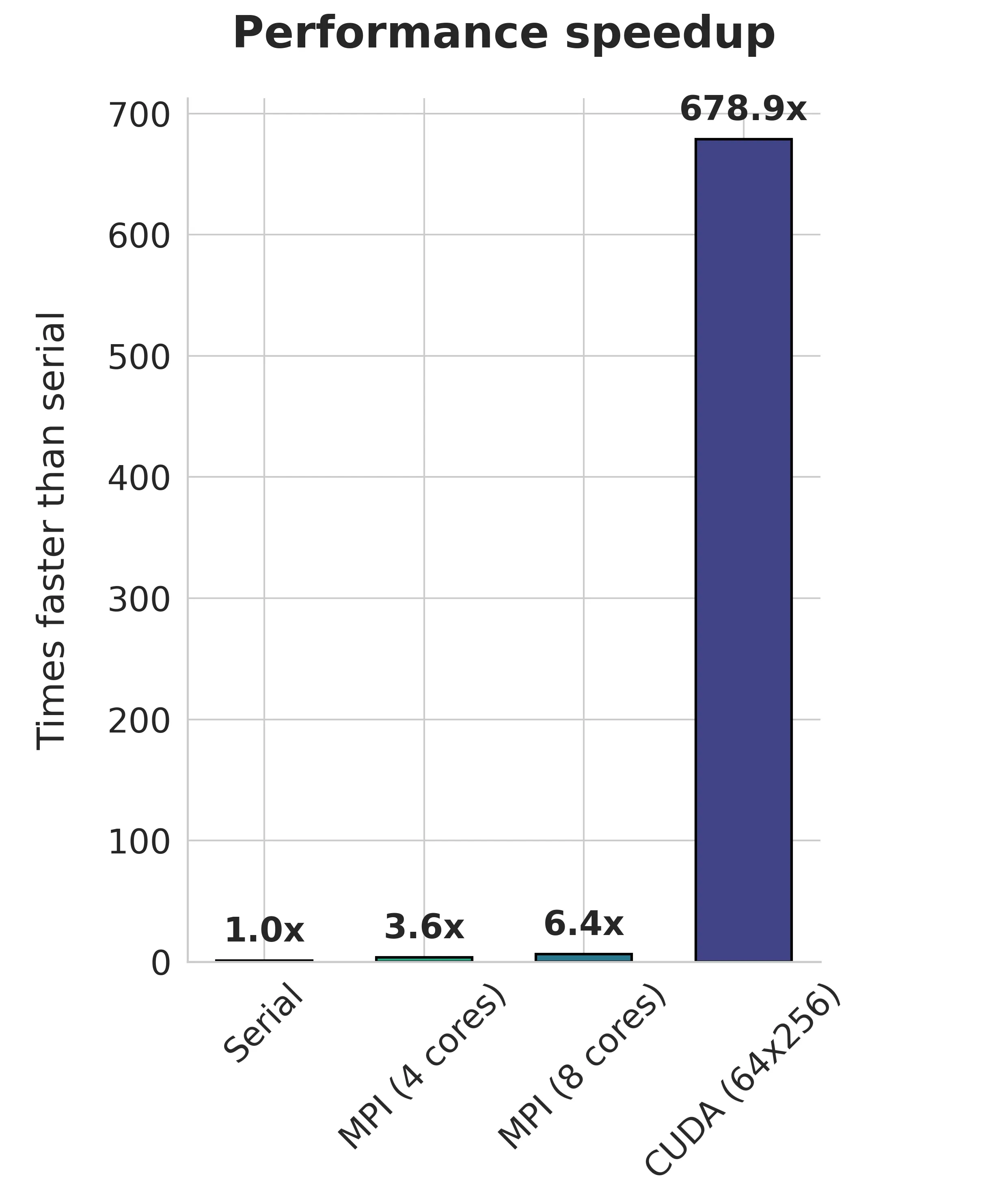
Bar chart of speedup versus the serial version: serial 1.0x, MPI with 4 cores 3.6x, MPI with 8 cores 6.4x and CUDA 678.9x
How much faster each version runs compared with the serial one. CUDA reaches 678.9x; MPI reaches 3.6x and 6.4x.
Scenario 1
Scenario 2
Scenario 3
Scenario 4

Four of the more than 14,000 scenarios I tested, each with different rules for entering and leaving the channel.

< 8 days

Tumor immunosurveillance

Peer-reviewed · IEEE ROPEC 2025
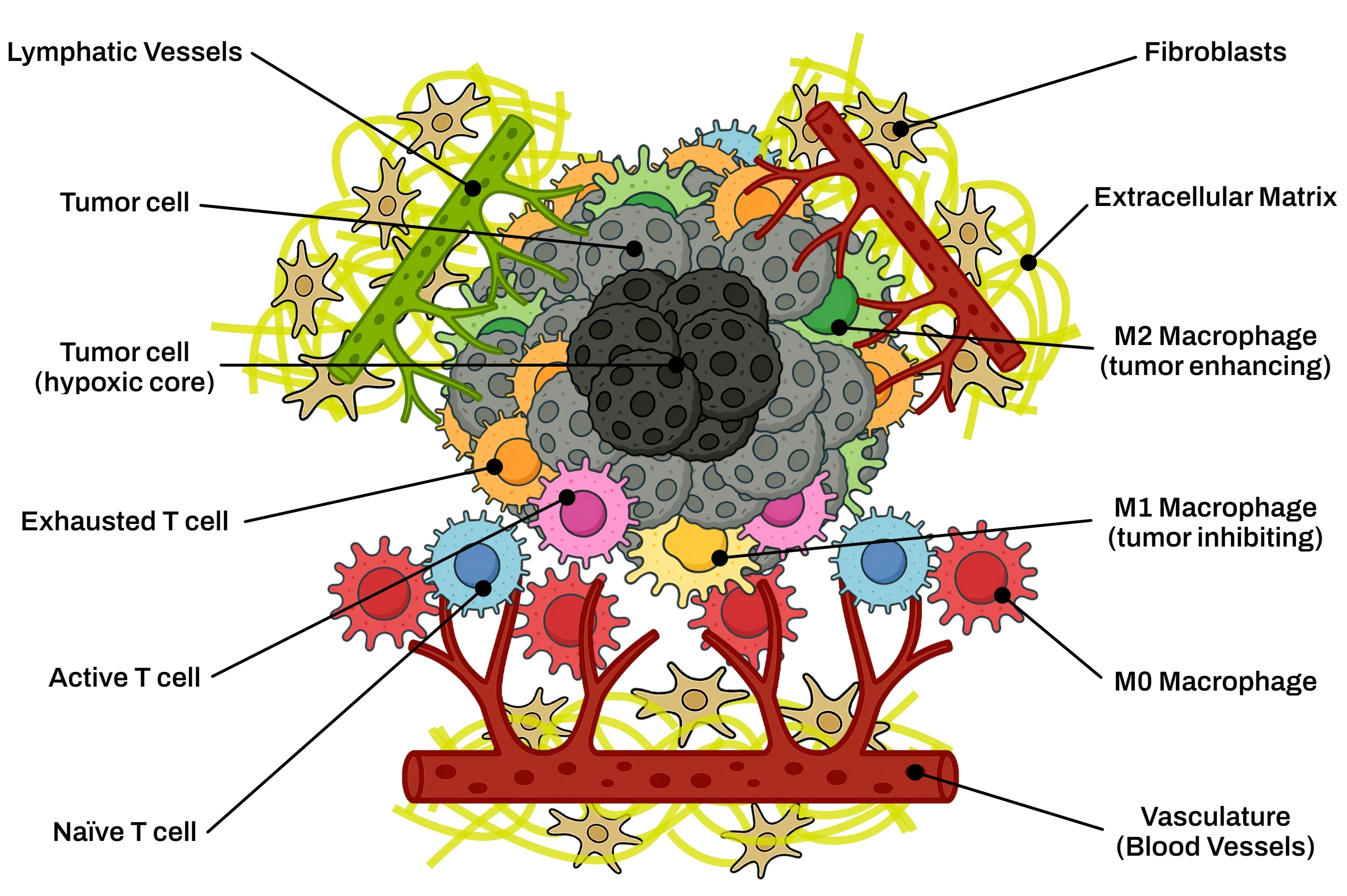
  • I modeled how the immune system interacts with a tumor: tumor cells, macrophages, T cells and blood vessels, each with its own rules.
  • I optimized how the simulation uses memory and parallelized it with OpenMP: 6 times faster across more than 7,600 runs.
  • The full analysis dropped from more than 32 days of computing to under 8, and the work was peer-reviewed and published in IEEE Xplore.
Diagram of the biological tumor immunosurveillance model, designed by hand
The biological model: a tumor with a hypoxic core surrounded by M0, M1 and M2 macrophages, active, exhausted and naive T cells, fibroblasts, extracellular matrix, and blood and lymphatic vessels.
The simulation running: each dot is a cell that moves, interacts and responds to the tumor.

6 hours

Brownian dynamics (bachelor's thesis)

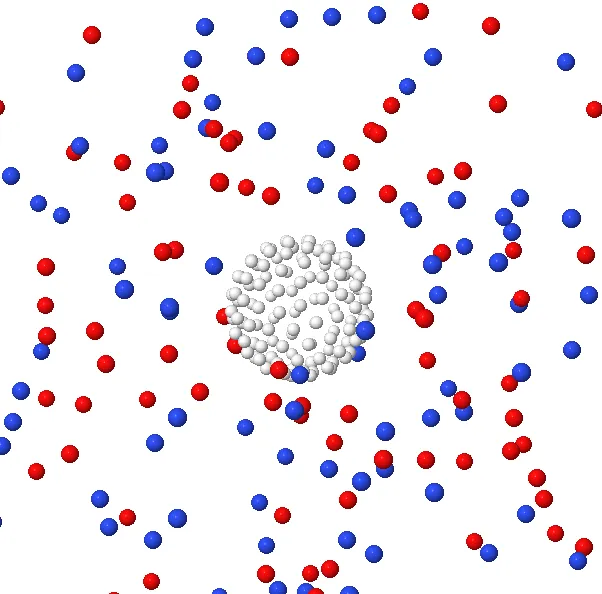
  • I simulated how positive and negative ions move around a charged particle, physics that requires computing a huge number of interactions at every step.
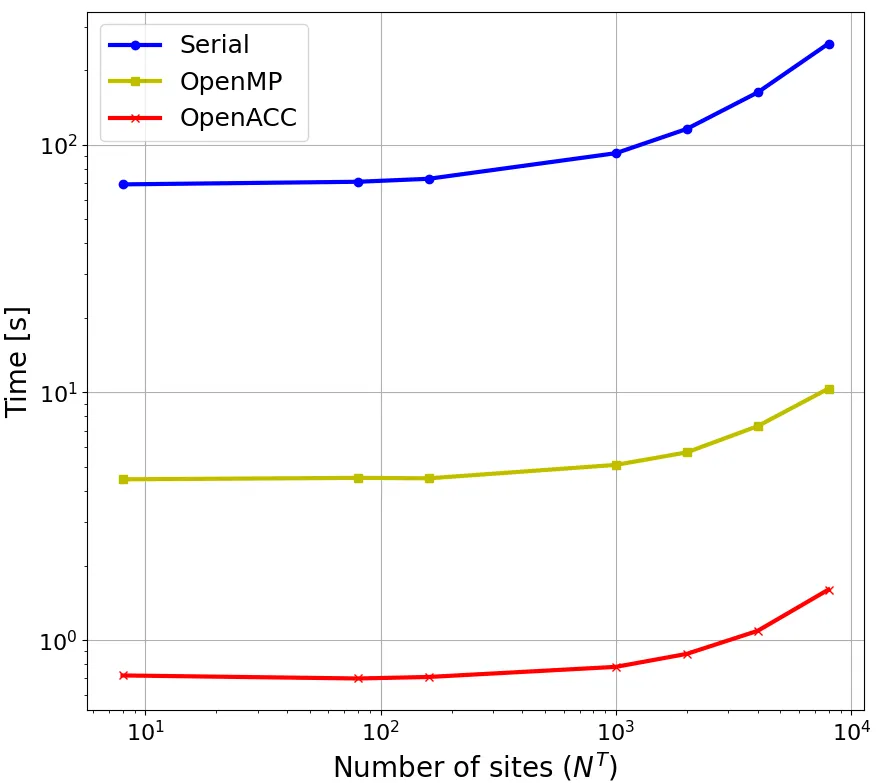
  • I wrote the simulation to split that work across hundreds of GPU cores with OpenACC.
  • What took 30 days in a normal run dropped to 6 hours. In the chart, the GPU runs 100 to 150 times faster than serial at every size.
Electrolyte simulation: positive and negative ions around a charged particle
A charged particle (white) surrounded by positive (red) and negative (blue) ions moving at random.
Chart comparing run times on serial CPU, OpenMP and GPU (OpenACC)
Run time by problem size (logarithmic scale): serial, OpenMP on CPU and OpenACC on GPU.